
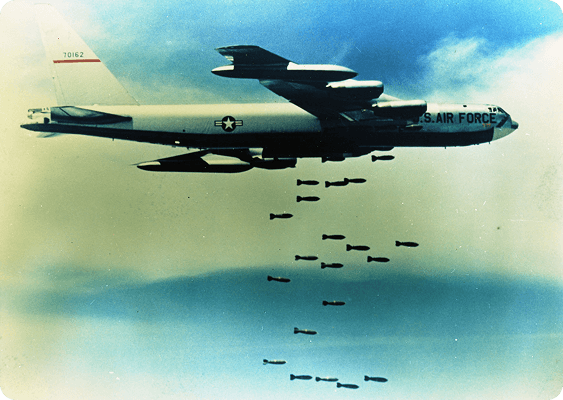
Since entering service with the U.S. Air Force in 1955, the Boeing B-52 Stratofortress has become one of the longest-serving military aircraft in aviation history. Designed during the early years of the Cold War as a long-range strategic bomber, the B-52 was built to carry both conventional and nuclear weapons across intercontinental distances.Powered by eight jet engines and capable of carrying up to 70,000 pounds of ordnance, the aircraft has proven remarkably adaptable through decades of technological advancement. Beyond its original nuclear deterrence mission, the B-52 has supported operations during the Vietnam War, Operation Desert Storm, Operation Enduring Freedom, and numerous other military campaigns.
Although newer bombers have joined the U.S. Air Force inventory, the B-52 remains in active service thanks to continual upgrades to its avionics, communications, navigation systems, and weapons capabilities. Its combination of long range, heavy payload, and operational flexibility has earned it the nickname “BUFF”—an affectionate acronym for “Big Ugly Fat Fellow.”
Manufacturer
Boeing
First Flight
1952
Entered Service
1955
Role
Long-range strategic bombe
Crew
5
Length
159 ft 4 in (48.5 m)
Wingspan
185 ft (56.4 m
Maximum Payload
70,000 lb (31,500 kg)
Maximum Speed
Approximately 650 mph (Mach 0.84)
Range
More than 8,800 miles (unrefueled)
Status
Active service with the U.S. Air Force
Your donation helps us preserve the personal histories of American airmen and women who served from Britain during the Second World War. Through digitisation, research, and public access, we ensure their courage and sacrifice remain accessible to families, scholars, and future generations.